Day Trading

Best Day Trading Books for Beginners

5 Best Day Trading Books for Beginners in 2026

The best day trading books for beginners provide a foundation for understanding market behavior, trading discipline, and risk management. Books like How to Day Trade for a Living offer practical execution frameworks, while many traders also choose to supplement these foundational concepts with modern market-analysis tools, such as Order Flow, to gain additional context in…
Best Trading Psychology Books

5 Best Trading Psychology Books in 2026

Many traders discover that their biggest challenge isn’t finding a strategy—it’s following one consistently when money is on the line. The best trading psychology books help beginners build better trading habits, develop healthier responses to losses, and create the mental foundation needed to turn a sound strategy into consistent execution. Leading frameworks range from Mark…
Discipline in Trading

Discipline in Trading: Professional Risk Management Explained

Trading discipline is a risk management system designed to protect a trading account from major losses. It utilizes concepts such as the Risk of Ruin, position sizing rules, and daily loss limits to reduce emotional decision-making, preserve capital units across losing streaks, and build the structural foundation needed to compound gains consistently. Discipline in Trading…
How to Learn Day Trading Futures

How to Learn Day Trading Futures in 2026

Learning to day trade futures begins with understanding contract specifications, risk management, and order execution. Most beginners start by studying Micro E-mini contracts such as MES and MNQ, practicing on simulated trading platforms, and developing consistent trading habits before committing significant capital. With a structured process and disciplined risk controls, traders can gradually progress from…
Types of Traders

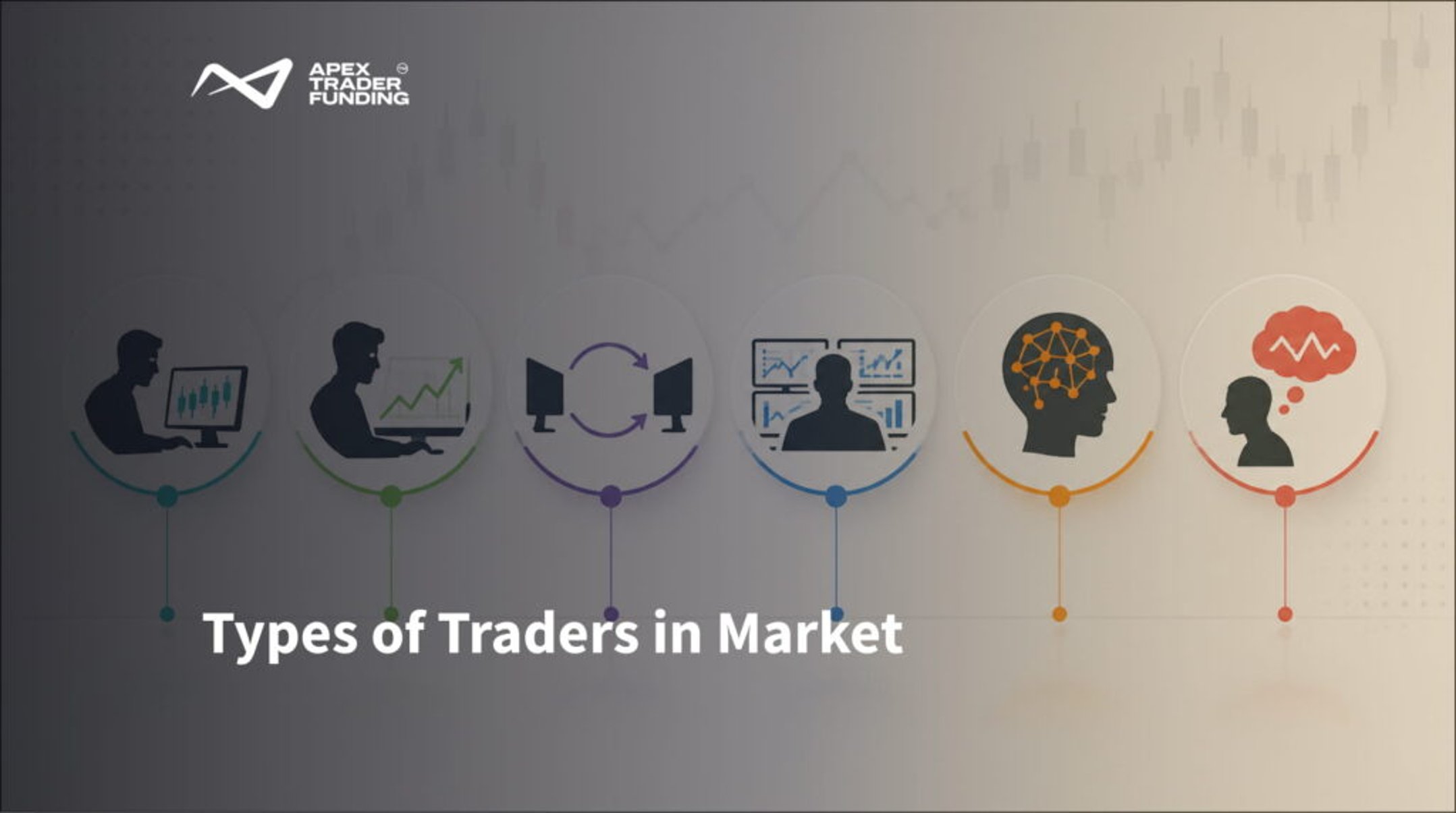
6 Different Types of Traders – Which Trading Style Fits You?

In 2026, traders are often grouped into six broad archetypes: Scalpers (high-frequency traders), Swing Traders (multi-day momentum traders), Arbitrageurs (price-gap traders), Prop Traders (firm-funded traders), Quants (algorithmic traders), and Noise Traders (emotion-driven participants). Long-term success often comes from matching your trading strategy to your capital, goals, and temperament while maintaining a disciplined and consistent decision-making…
Trading Psychology Tips

Trading Psychology Tips: The Hidden Behaviors That Destroy Profits

In 2026, trading psychology is a trackable execution layer, not just a mindset. It is measured by the gap between planned risk and actual trading behavior using metrics like Cognitive Fatigue (90-minute thresholds) and Discipline Violation Tags. By using automated risk-locks and journal heatmaps, traders can turn emotional mistakes into data-driven improvements to maintain strategy…
Is Day Trading Legal in Canada?

Is Day Trading Legal in Canada? – Tax Rules & CRA Risk Explained

Yes, Day trading is legal in Canada. However, the Canada Revenue Agency (CRA) typically classifies frequent trading as business income (taxed at 100%) rather than capital gains (50-66.7% inclusion). Day trading within a TFSA is highly restricted; if the CRA deems the activity a “business,” all gains become fully taxable, and tax-free status is revoked. …
Rithmic vs Tradovate

Rithmic vs Tradovate – Which Futures Platform Should You Use?

Rithmic is the preferred infrastructure for high-frequency scalpers requiring Market-by-Order (MBO) data and low-latency RAPI+ protocol execution. Tradovate is superior for retail traders prioritizing multi-device accessibility and TradingView integration. Choose Rithmic for precision order flow; choose Tradovate for cost-effective, cloud-native ease of use. Traders often confuse these two because they misunderstand the role and structure…
What Is Futures Trading and How Does It Work

What Is Futures Trading and How Does It Work?

Futures trading is the buying and selling of standardized financial contracts that obligate parties to transact an asset at a predetermined price and future date. Active traders often use highly liquid futures markets such as the S&P 500 and Nasdaq to participate in short-term price movements within a transparent, exchange-regulated environment. Success in futures trading…
How Long Does It Take to Learn Day Trading?

How Long Does It Take to Learn Day Trading?

Learning day trading takes longer than expected. A realistic one-to-three-year progression spans from foundational theory to consistent live execution, covering the technical, financial, and psychological skills defining professional competence. Whether starting from scratch or accelerating an existing practice, understanding this actual timeline is the first step toward building a sustainable, disciplined process that works.  Day…
Best Day Trading Platforms

7 Best Day Trading Platforms in 2026

The best day trading platform depends entirely on your asset class. Retail stock and options traders should look for zero-commission brokers with powerful charting like thinkorswim or Webull. Conversely, futures and proprietary firm traders require specialized, low-latency platforms like NinjaTrader or Tradovate that offer direct exchange routing and strict risk-management enforcement. Day trading is fast,…