Executive Summary: Futures trading is the buying and selling of standardized exchange-traded contracts that obligate parties to buy or sell an asset at a predetermined price on a future date. Contracts are traded on regulated exchanges such as the CME Group and use leverage, which can magnify both gains and losses.
What Is Futures Trading?
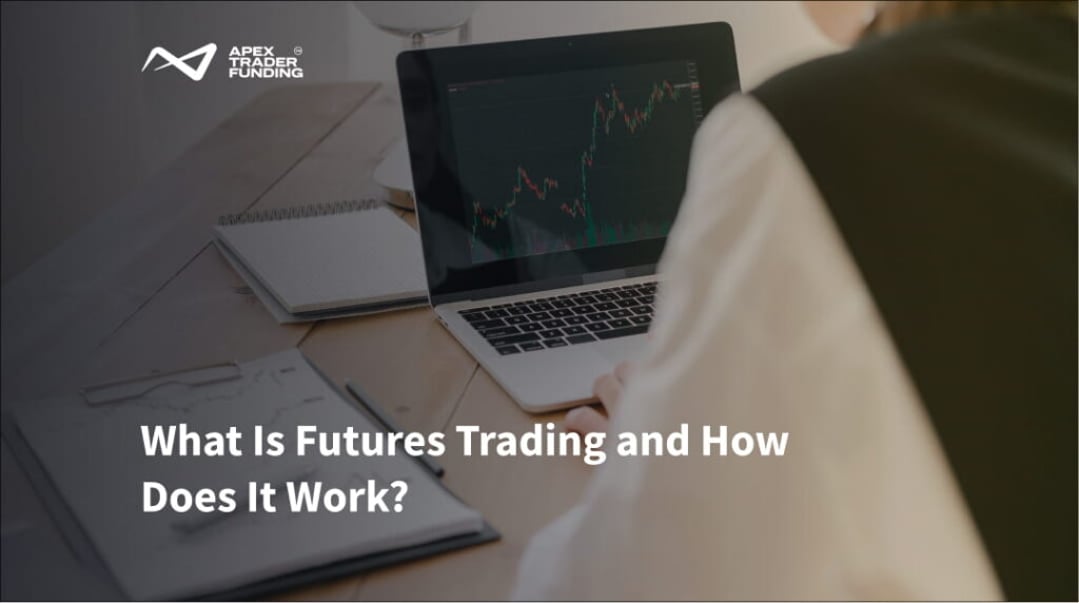
Futures trading involves buying and selling contracts to buy or sell an asset at a set price on a future date. Each contract represents a standardized amount of the underlying asset and is traded on regulated exchanges like the CME Group.
Futures are used for two primary purposes:
- Hedging: Businesses and investors may use futures to manage exposure to changes in commodity prices, interest rates, currencies, or financial indexes.
- Speculation: Traders may take long or short positions in an attempt to profit from changes in the contract’s price.
A trader takes a long position when expecting the futures price to rise and a short position when expecting it to fall. In either case, the trader can incur losses if the market moves against the position.
In the United States, futures exchanges operate under the oversight of the CFTC (Commodity Futures Trading Commission), while the NFA (National Futures Association) acts as the industrywide self-regulatory organization for the US derivatives industry. A personal futures account is generally carried by an FCM (Futures Commission Merchant), a registered intermediary that accepts futures orders and holds customer funds used to support those trades.
Futures contracts have defined expiration and settlement terms. Depending on the contract, a position may be closed or rolled before expiration, settled in cash, or proceed to physical delivery under the contract’s specific rules. Traders should review the contract specifications to understand the applicable settlement process.
Traders generally access futures markets in one of two ways: through a personal brokerage account or through an evaluation-based prop trading program.
Futures Prop-Firm Trading Programs: An Alternative
Futures prop firms are mostly simulated and typically accessed through an evaluation account that requires an upfront fee, where traders must meet specific performance criteria before gaining access to a simulated capital environment (funded account). Unlike brokerage orders, orders executed in a simulated environment are generally not sent to live exchanges as actual futures trades. Leverage, notional value, and contract specifications still mirror real futures market conditions.
These accounts are governed by the prop firm’s internal rules, such as drawdown and daily loss limits, which control risk and enforce predefined trading limits during the evaluation and funded phases.
Although simulated positions do not result in physical delivery or exchange settlement, the program may still impose rules for managing positions around contract expiration and rollover.
This structure may provide access to simulated futures trading for a lower upfront cost than funding a comparable personal brokerage account, although the account remains subject to the program’s rules and limits.
Types of Assets in Futures Trading
Futures trading gives access to a wide range of global markets through standardized exchange-traded contracts. Each contract is linked to a specific type of asset, allowing traders to speculate on or hedge exposure to price movements across different sectors of the economy.
Common asset categories in futures trading include:
| Asset Category | Examples |
| Equity indexes | S&P 500 (ES), Nasdaq (NQ) |
| Energy products | Crude oil (CL), natural gas (NG) |
| Metals | Gold (GC), silver (SI) |
| Agricultural commodities | Wheat (ZW), corn (ZC), soybeans (ZS) |
| Interest rates | Treasury futures (10Y Note ZN, 30Y Bond ZB) |
| Currencies | Euro FX (6E), Japanese Yen (6J), British Pound (6B), Australian Dollar (6A) |
| Digital assets | Bitcoin futures (BTC) |
CME Group operates several exchanges, including NYMEX, where many energy contracts are listed, and COMEX, which lists metals contracts.
Each of these categories trades as standardized futures contracts, but the contract specifications differ significantly from one market to another. One of the most important differences is how price movement is measured through tick size and point value.
A tick is the smallest possible price movement a futures contract can make, as defined by the exchange. A point is a larger price increment that may consist of multiple ticks depending on the contract. The financial impact of each tick or point is determined by the contract’s multiplier, meaning the same price movement can have very different dollar values across markets.
For example, a one-point move in the E-mini S&P 500 futures contract represents a $50 change in value, while a one-tick move in standard WTI crude oil futures represents a $10 change per contract. This difference shows why traders must always understand the specific contract they are trading and not treat all futures the same.
Micro Futures May Be More Practical for Beginners
Standard contracts such as ES and CL can create substantial dollar exposure from relatively small price movements. Futures also offer Micro contracts with smaller contract sizes.
Micro futures contracts are typically one-tenth the size of their standard counterparts. For example, the E-mini S&P 500 (ES) moves about $50 per full point, while the Micro E-mini S&P 500 (MES) moves about $5 per point. This difference in dollar value per tick reduces the impact of each price movement, which can make micro contracts easier to use when learning position sizing or practicing execution. However, they are still leveraged instruments, so multiple micro contracts can quickly add up to the same exposure as a standard contract.
Once a trader selects an asset class and understands its contract specifications, the next step is executing a trade through a broker or platform.
How Do Traders Buy and Sell Futures Contracts?
Traders buy futures contracts when they expect prices to rise and sell them when they expect prices to fall. A futures position changes in value as the market moves and must be managed according to the contract’s margin requirements and expiration rules.
When a trader submits a buy or sell order, it becomes part of the market’s order flow, the ongoing stream of orders and completed trades. Once the order is matched on the exchange, the position is opened at the executed price. A position represents a fixed amount of the underlying market. Its total represented value is called the notional value. Traders do not normally pay this full amount. Instead, they deposit margin, which acts as a performance bond supporting the position.
The two main margin levels are:
- Initial Margin: The amount required to open a futures position. A broker may require more than the minimum set by the exchange.
- Maintenance Margin: The minimum account equity required to keep the position open after it has been established.
Using margin creates leverage because the trader receives the gains or losses from a contract worth more than the amount deposited. A relatively small price movement can therefore have a significant effect on the account. A margin call may occur when account equity falls below the maintenance-margin requirement. The broker may require additional funds to restore the account to the initial-margin level.
While the position is open, its value rises or falls with the market. These gains and losses are credited to or deducted from the account through mark-to-market settlement. The position’s value changes during the trading session, while the formal settlement process generally occurs each trading day.
Closing or Settling the Contract
A trader may close the position through the trading platform before the contract expires. If exposure to the market is still required, the expiring contract may instead be closed and replaced with a later contract month, known as rolling.
A contract that remains open through expiration is handled according to its settlement terms:
- Cash settlement: The account receives a final cash adjustment based on the contract’s settlement value.
- Physical delivery: The contract may require delivery or receipt of the underlying commodity or financial instrument.
The applicable deadlines vary by contract, and a broker may close a position early if the account is not approved or sufficiently funded for delivery.
Conclusion
Futures markets can be highly dynamic, offering opportunity across global contracts, but they demand a solid grasp of leverage, contract behavior, and disciplined risk control to navigate effectively.
For speculating on futures, traders often choose either personal brokerage accounts or evaluation-based trading programs with set rules. Apex Trader Funding is one example of a prop firm that uses an evaluation-style structure with set participation parameters. Regardless of the approach, long-term consistency depends on developing a sound strategy, effective risk management, and strong emotional discipline.
Disclaimer: Futures trading involves substantial risk and may not be suitable for every trader. Leverage can magnify losses, and losses may exceed the amount initially allocated to a position. Simulation, education, and risk limits cannot guarantee execution or profitability. Review all applicable terms and consider your financial situation before trading.
FAQs
Is futures trading safe?
Futures trading is inherently high-risk because leverage can magnify small price movements. Risk-management tools such as stop-loss orders may help limit downside, but they cannot guarantee the execution price, and losses can exceed the funds deposited. Futures trading requires strict discipline and a well-defined trading plan to manage risk consistently.
Is futures trading good for beginners?
Futures trading can be suitable for beginners who approach it with education, patience, and risk control. It offers lower capital requirements and access to diverse markets, but it’s also highly leveraged. Beginners should start with micro contracts or a simulated account to learn discipline before trading live capital.
Can I trade futures daily?
Yes, you can trade futures daily. Futures markets operate nearly 24 hours a day, allowing traders to enter and exit positions multiple times within a session. Many professionals and prop firm traders focus on intraday strategies, aiming to capture short-term price movements while maintaining strict risk control.