Prop Trading

How Much Does a Prop Firm Account Cost?

How Much Does a Prop Firm Account Cost in 2026?

Executive Summary: Prop firm evaluation fees typically range from $100 to $600, depending on account size and asset class. Beyond the initial fee, traders should also review platform costs, data fees, and drawdown rules before getting started. Understanding what the fee covers — and what it doesn’t — helps set realistic expectations from the start. …
Prop Firm Trading Guide Everything You Need to Know

Prop Firm Trading Guide: Everything You Need to Know in 2026

Executive Summary: Prop firm trading is a structured evaluation process where traders demonstrate consistency by meeting predefined performance conditions. Once the requirements are met, traders will receive a simulated funded account and achieve rewards based on performance, commonly structured around 80-100% between the trader and the firm. What is Prop Firm Trading and How Does…
What Is a Prop Firm Challenge & How to Pass It

What Is a Prop Firm Challenge & How to Pass It in 2026

Executive Summary: A prop firm challenge is a structured evaluation designed to assess a trader’s ability to achieve an approximately 6% profit target while operating within defined parameters. Passing a prop firm evaluation is really about staying consistent and sticking to the rules around risk. It’s less about rushing to hit the target and more…
Effective Risk Management Strategies for Prop Firm Funded Accounts

Effective Risk Management Strategies for Prop Firm Funded Accounts

Executive Summary: Risk management in prop accounts focuses on protecting drawdown limits rather than account balance. Position sizing should reflect allowable loss, not equity. Effective control includes personal loss caps, news awareness, correlation management, and data-driven risk-to-reward analysis to prevent breaches and maintain consistent performance within firm rules. Introduction Prop firms are trading programs that…
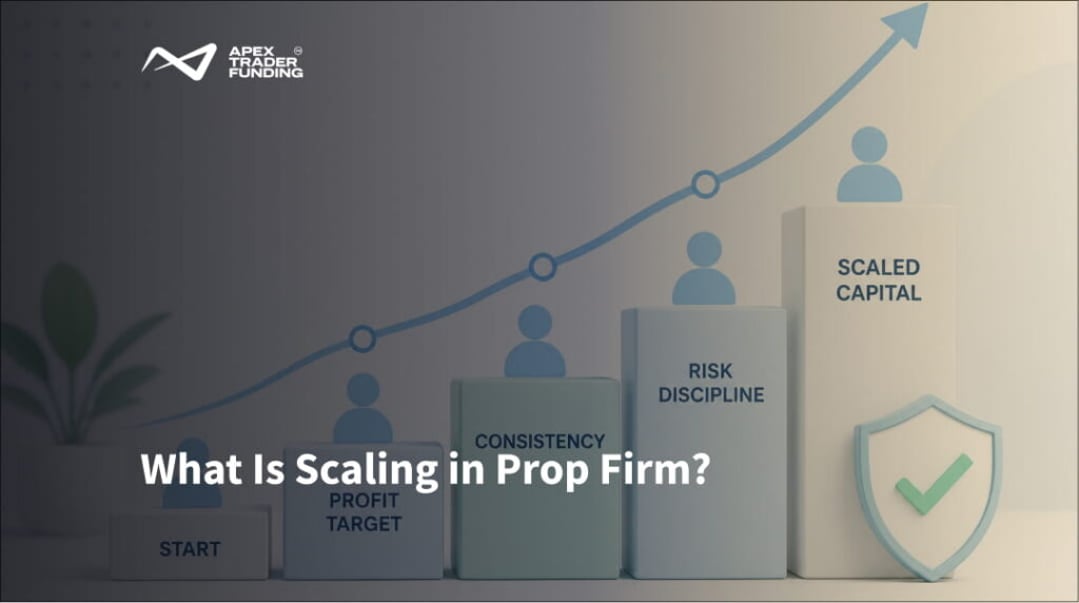
What Is Scaling in Prop Firm?

What Is Scaling in Prop Firm? – A Detailed Guide

Executive Summary: Prop firm scaling can increase a trader’s account size or contract allowance based on different program rules. Some firms use milestones such as profit, consistency, or payout requirements, while others use dynamic contract ladders tied to balance or equity thresholds. Traders should understand the specific scaling model and adjust risk gradually as trading…
Is Tradovate a Prop Firm?

Is Tradovate a Prop Firm or Broker? – Key Differences Explained

Executive Summary: Tradovate is not a proprietary trading firm. It is an online futures brokerage and technology platform owned by NinjaTrader. Prop firms operate evaluation or funded account programs, which may use simulated trading environments or provide access to firm capital for live trading.  What Traders Need to Know About Tradovate Tradovate is a cloud-based…
What is Proprietary Trading (Prop Trading)

What is Proprietary Trading (Prop Trading)? – A Detailed Guide

Executive Summary: Proprietary trading (prop trading) occurs when a financial firm invests its own capital for direct market gain rather than earning commissions by managing client funds. Traditional prop firms hire salaried traders to trade live capital, whereas retail prop programs evaluate independent traders via fee-based simulated accounts subject to strict drawdown rules. What Is…
Is NinjaTrader a Prop Firm?

Is NinjaTrader a Prop Firm? – Full Explanation for Traders

Executive Summary: No. NinjaTrader is not a proprietary trading firm. It is a software developer and NFA-regulated Futures Commission Merchant (FCM). Traders must fund NinjaTrader brokerage accounts with their own capital. However, independent futures prop firms frequently license NinjaTrader as their execution interface for evaluation and funded accounts. What is NinjaTrader? NinjaTrader is frequently mentioned…