Executive Summary
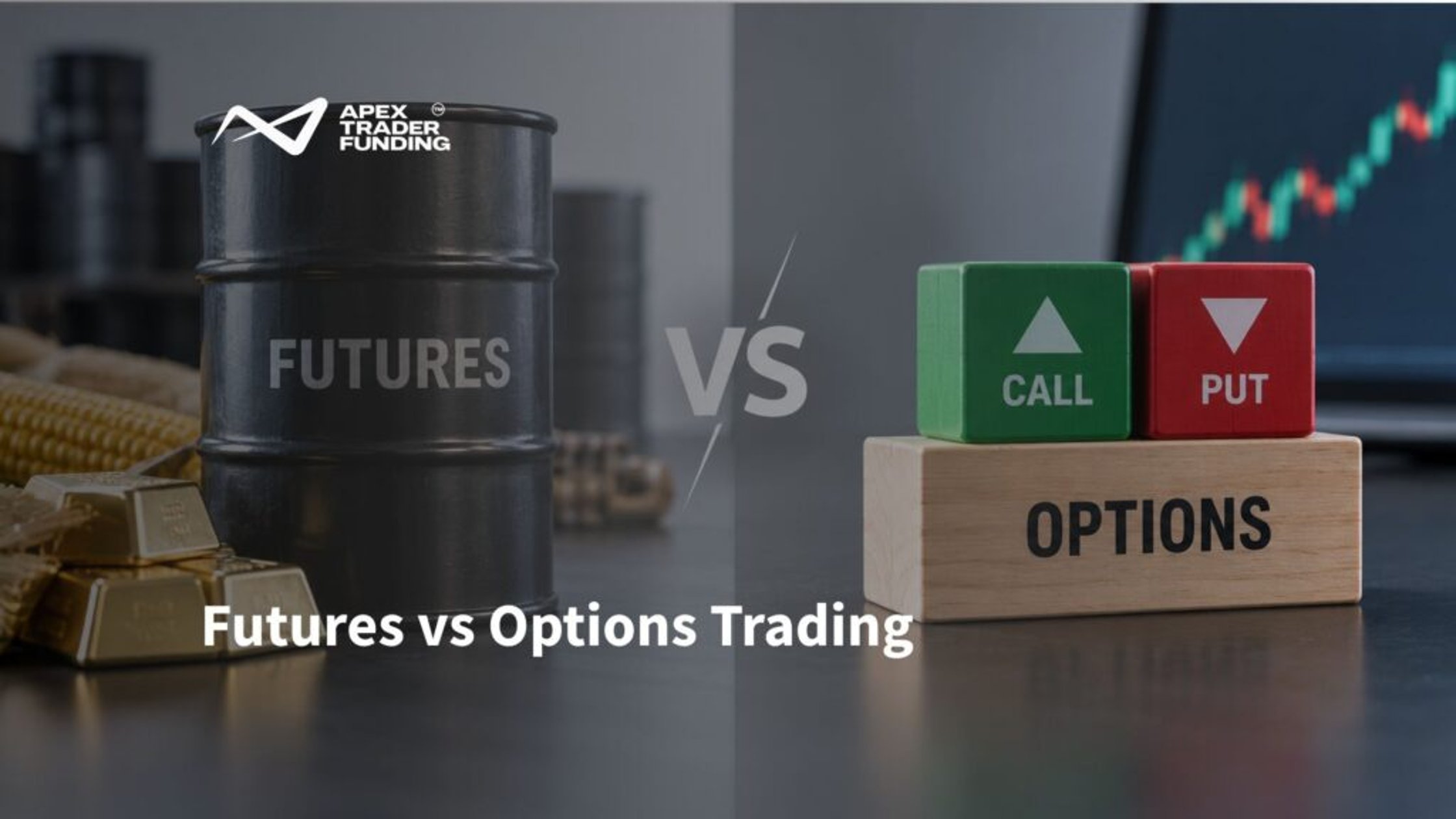
The main difference between futures and options is commitment. Futures require both the buyer and seller to complete the trade at a set price on a future date. Options give the buyer the choice to trade or not, and the most they can lose is the upfront premium paid.
What Are Futures?
Futures are contracts that let traders agree today on a price to buy or sell an asset at a set date in the future. These contracts are standardized and traded on exchanges, and they must be completed or closed by expiry, making them a structured way to trade future price movements.
Futures are widely used across commodities, indices, and currencies. Instead of owning the underlying asset, which is the actual market or product the contract is based on, such as crude oil, a stock index, or a currency, traders participate in price movements using fixed-specification contracts created and governed by exchanges such as CME Group. An exchange is the platform where futures contracts are created, traded, and matched between buyers and sellers.
What Are Options?
Options are contracts that give the buyer the right, but not the obligation, to buy or sell an asset at a fixed price before expiry. The buyer pays an upfront fee called a premium. Risk is limited to this premium, while profit depends on price movement and time conditions.
Options are financial contracts that allow traders to take a position on price movement without being required to complete the trade.
They come in two types:
- Call options: give the right to buy an asset (used when expecting prices to rise)
- Put options: give the right to sell an asset (used when expecting prices to fall or to protect positions)
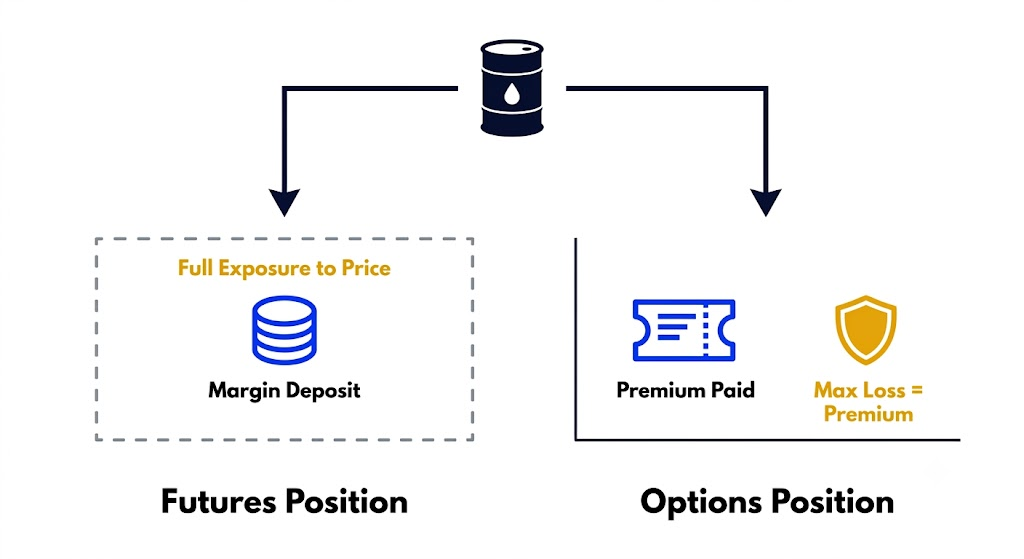
To enter an options trade, the buyer pays a premium, which is the upfront cost of the contract. This amount is the defined cost of entering the contract, regardless of outcome.
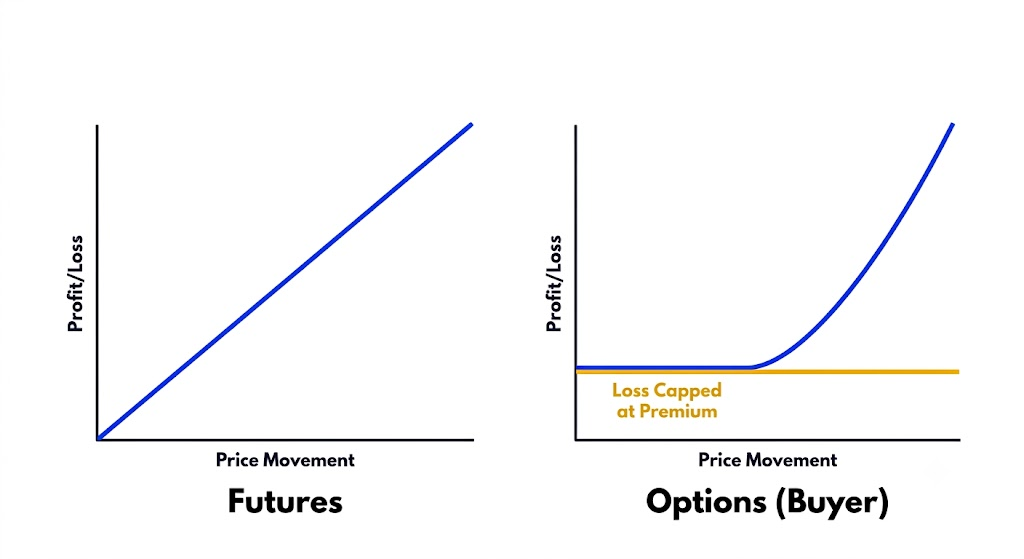
Unlike futures, options do not require the buyer to complete the trade. If the price does not move as anticipated, the buyer can choose not to exercise the contract and let it expire at the end of its term. In that case, the loss is limited to the premium paid.
Primary Differences Between Futures and Options
Futures require traders to complete or close a contract, while options give traders a choice to act or not. Futures use margin and move directly with price changes. Options require a premium, offer limited risk for buyers, and their value changes based on price movement, volatility, and time.
Volatility is the degree to which a market’s price moves up and down over a given period; higher volatility means larger and faster price swings, which affects trading conditions across all instruments.
| Feature | Futures | Options |
| Obligation | Must complete or close the trade | No obligation to trade |
| Entry Cost | Margin or a Small deposit (used to open the position) | Upfront payment to buy the contract |
| Risk | Depends on market movement and position size | Limited to the amount paid for the contract (for buyers) |
| Price Movement | Changes closely with the asset price | Depends on price movement, time left, and market expectations |
| Time Effect | No loss in value due to time | Value may reduce as expiry gets closer if price does not move as expected |
How Futures and Options Work?
Futures:
In futures trading, a trader takes a position based on whether they expect the price to rise or fall. For example, crude oil futures allow traders to take positions on oil prices without owning physical oil. Each contract represents a fixed quantity of oil.
Since futures use margin, traders only need to deposit a portion of the total contract value. This allows access to larger positions with less capital. However, because the position is leveraged, small price changes can have a significant impact on profit or loss. If the price rises, the trader gains by the same amount that the price increased. If the price falls, the position declines by the same amount. Maintaining a sufficient account balance relative to open positions is part of the standard margin management process in futures trading.
This structure makes futures suitable for active trading and short-term strategies that rely on fast price movement.
Options:
Using the same crude oil example, a trader buys a call option expecting oil prices to rise. Instead of owning oil or being fully exposed to price changes, the trader only holds the right to buy oil at a fixed price. If oil rises strongly, the option increases in value because it gives the holder the right to buy at a price below the current market level. If oil falls, the option may lose value and close at the end of its term unused, with the loss limited to the premium paid.
The key benefit is controlled risk: the maximum possible loss is known in advance and limited to the premium paid. However, options also lose value as time passes if the expected price movement does not happen. This means timing and market movement both matter.
Options are often used when traders want limited risk or want to build structured strategies based on market conditions.
What Is the Viable Path to Choose?
Futures and options serve different trading purposes, and the choice depends on how you want to engage with the market.
Choose futures if you prefer direct exposure to price movements and a simple structure where profit and loss move closely with the market. Futures are commonly used by traders who focus on short-term price movements in active markets where positions can be entered and exited quickly.
Choose options if you prefer a structure where risk is defined in advance, since the maximum loss is limited to the amount paid for the contract. Options are often used when traders want to combine direction with timing and market conditions such as volatility.
Understanding futures and options is easier when you see how they behave in real market conditions. If you want to apply these concepts in a structured way without committing personal capital upfront, you can explore evaluation-based trading environments such as Apex Trader Funding. These platforms allow you to focus on developing consistency and understanding contract behavior in a live-market setting.
Disclaimer: Futures and options trading involves substantial risk of loss and is not suitable for all traders. Past performance is not indicative of future results. Only risk capital should be used.
FAQs:
Can I sell futures without buying?
In futures trading, a position can be opened by selling a contract first; this is called going short, and then buying it back later to close it.
- Traders only need enough margin to open the position
- Short trades execute through the same process as long trades on most futures platforms.
- Profits depend on the contract price declining after entry
This makes futures trading flexible in both rising and falling markets.